That Dry Ditch Behind a Rapid Valley Home Has a Story You'll Want Before Closing
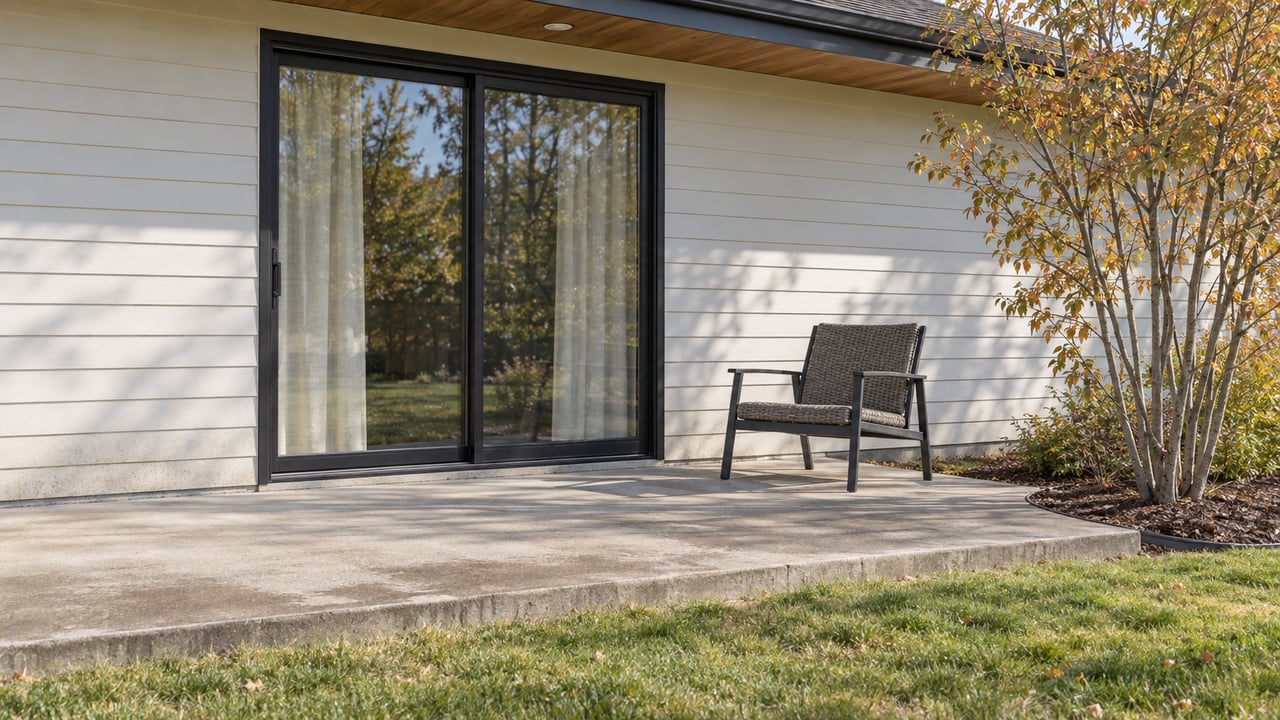
Say the Rapid Valley home you're about to make an offer on has a grassy channel along the back of the lot. It may well be part of Hawthorne Ditch. Since December 2021, almost none of the water rights that kept it running are still tied to it. Most of those rights now belong to the City of Rapid City and a golf course. What's left in that backyard is a channel that collects runoff from the neighborhoods above it. Who owns each stretch is being worked out one parcel at a time, and some nearby shallow wells used to depend on its seepage. Water shares are the old closing question. Now the questions are who owns that strip, what runs through it, and what your well was counting on.
Hawthorne Ditch was built in 1890. It's an 8.5-mile channel that starts at a diversion on Rapid Creek east of the Central States Fairgrounds and ends at a stock pond west of Rapid City Regional Airport. A 2017 South Dakota Mines study described it as running from May to October, rated for 19.98 cubic feet per second, with water rights to irrigate 986 acres of farmland.
On December 8, 2021, the South Dakota Water Management Board approved two transfers out of the ditch's main water right, No. 2039-2. One moved 2.79 cfs to Arrowhead to irrigate 167 acres. The other moved roughly 17.2 cfs to the City of Rapid City. The state's permit ledger lists 17.18 cfs and the board's approval uses 17.19, and the ledger shows the original right left with nothing. Neither application was contested. When Mark Rath of the state Water Rights Program presented them, the board minutes recorded this:
"He noted that if the two applications are approved, Hawthorne Ditch Company will essentially be out of the irrigation business."
The board described Arrowhead as a golf course in southwestern Rapid City. The city's share was approved for municipal use, drawn at the Mountain View Water Treatment Plant, the Sioux Park Gallery or the Jackson Springs Gallery, with an option to store it at Pactola. So water that used to move east across Rapid Valley in summer was assigned to taps in town and fairways on the west side. I couldn't find any public record of how much of that transferred right the city has actually used in a given year.
An irrigation ditch moves water to fields, and it also leaks. Along one stretch of Hawthorne, that leaking mattered. The SD Mines students studied a 0.44-mile section near Carlin Street. They found that while the ditch was running, nearby residents had full wells because the water table sat high. After 7 to 9 days of water in the ditch, wells that had been nearly empty were seen full again. The same study said seepage through the ditch's south bank was behind the high groundwater some homeowners dealt with in summer. The ditch raised water levels nearby, and how people felt about that depended on where they lived.
Then the water stopped. In August 2023, Rapid Valley residents Dan Mulally, Linda Hayward and Jim Hayward spoke during public comment at Rapid City's Standing Committee on Sustainability. They said the ditch had been shut down for several years after the city acquired the water rights, and that the closure hadn't been well communicated to people nearby. They reported that private well levels had dropped, that trees were dying, possibly because the water table was falling, and that well water had gotten harder and lower in quality. Those are residents' accounts in the minutes, not findings from a study. I haven't found any agency groundwater monitoring since then that confirms or rules them out. If you're buying a home with a shallow well near the old channel, the real question is how that well performed before and after the ditch went dry. The listing won't tell you.
The channel didn't go away when the water did. By early 2024, the West Dakota Water Development District was calling it the "decommissioned Hawthorne irrigation." The district had pulled together a meeting with City of Rapid City and Pennington County staff, including Commissioner Travis Lasseter. They talked about drainage problems in Rapid Valley, whether the old ditch could be used for drainage, and what role the district could play. The minutes also record concern that property owners might fill in the ditch on their own land.
At that same meeting, Linda Hayward of Long View Road said her household had obtained a quit claim deed for the stretch of ditch on their property. The minutes also note that the county has no drainage fee, and that the county and city agree there should be a master drainage plan. Back in 2023, residents had already told the city committee that because of development uphill, the ditch was now acting as a storm drain even though it wasn't built for that.
The talks are still going. In August 2025, a district director called for looking into "utilizing Hawthorne Ditch" to meet water needs in Rapid Valley. The district's next meeting is scheduled for October 13, 2026. As of today, the public record shows ideas under discussion and no adopted project. That leaves a few open questions for any parcel the channel crosses. It may still belong to the ditch company, or it may have been deeded to the homeowner the way the Long View Road segment was. It may carry runoff from the neighbors uphill. A future drainage plan could give it a public job. Each of those changes what you're buying.
Part of the confusion at closing comes from the word "water," which can mean three separate things here. Each one runs on its own rules.
| What it is | Who keeps the record | What the sources say about a sale |
|---|---|---|
| A state water-right permit for irrigation | SD DANR Water Rights Program | Irrigation rights are generally appurtenant to the land and pass with the title, and any transfer must be filed with the chief engineer within 90 days |
| Ditch-company shares | The ditch company's own books | A 2005 state file left open whether a particular Hawthorne right was tied to the land or to ditch shares |
| Household water service | Rapid Valley Sanitary District | Changes in service require an in-person application, the meter deposit doesn't transfer, and the district can pursue the property owner for unpaid charges |
The state law sources are SDCL 46-5-33 on appurtenance and SDCL 46-5-30.3 on the 90-day filing. South Dakota also treats water as belonging to the people of the state, and a permit authorizes putting that water to beneficial use.
The share question is where Hawthorne's history gets specific. The state's file on a 2005 transfer of a small Hawthorne right recorded an open question about whether that right was attached to land or to ditch-company shares. The same file includes an irrigator's report that a neighboring owner had sold off their Hawthorne shares. That permit also said that when natural flow wasn't available, the holder had to buy irrigation water through the Rapid Valley Water Conservancy District under its Deerfield contract with the Bureau of Reclamation. If a seller mentions "ditch rights," those are the layers to check. After 2021, the permit side of Hawthorne's main right shows zero.
On the household side, the Rapid Valley Sanitary District's water ordinance holds the consumer of record responsible for the bill. The district can go after the property owner if that person doesn't pay, and it identifies the owner through Pennington County Recorder's Office records. If a meter deposit doesn't cover a closed account's balance, the remainder is assessed to the owner, and service won't be restored until it's paid. A final reading and a paid-in-full account belong on the closing checklist next to the title work.
All of this is playing out in a dry year. On September 9, 2026, RVSD announced that outdoor watering restrictions will stay in effect for the rest of 2026. Its schedule bans watering between 9 a.m. and 6 p.m. KOTA reported on September 30, 2026, that Pactola was at 70% capacity with inflows around 23 cfs, about half the seasonal average of 40 cfs. Rapid City Water Superintendent Eric Boyda said the city remains at "alert" conservation status. Back in mid-August, KELO reported the reservoir sitting about 20 feet below full. If you're relying on a private well near a ditch that no longer carries summer water, it makes sense to look closely at its recent performance in a year like this.
When a Rapid Valley property has the Hawthorne channel on it or right next to it, this is the order I work through:
None of this is legal advice. A title company or attorney handles the deed and water-right questions. My job is making sure those questions get asked while you can still negotiate.
Is water flowing in the ditch today? I haven't found a current public source that confirms flow along the whole channel. The only USGS gauge on it stopped recording daily flow in 1982.
Can a buyer still get Hawthorne irrigation water? After the 2021 transfers, the state ledger shows nothing left in the ditch's main right, and the state's own presenter said the company would essentially be out of the irrigation business.
Has anyone fixed the well concerns? The district minutes through August 2025 show discussion and a call to study the ditch's use. They don't show any published groundwater results or a resolution.
If there's a dry channel behind the Rapid Valley home you're looking at, send me the address. I'll pull the records and help you work through ownership, the well history and the water paperwork before you sign. Reach out to Cheyenne McGriff, or start with a free home valuation if you're on the selling side and want to know how that strip of land fits into your sale.

Get assistance in determining current property value, crafting a competitive offer, writing and negotiating a contract, and much more. Contact Cheyenne today to discuss all your real estate needs!