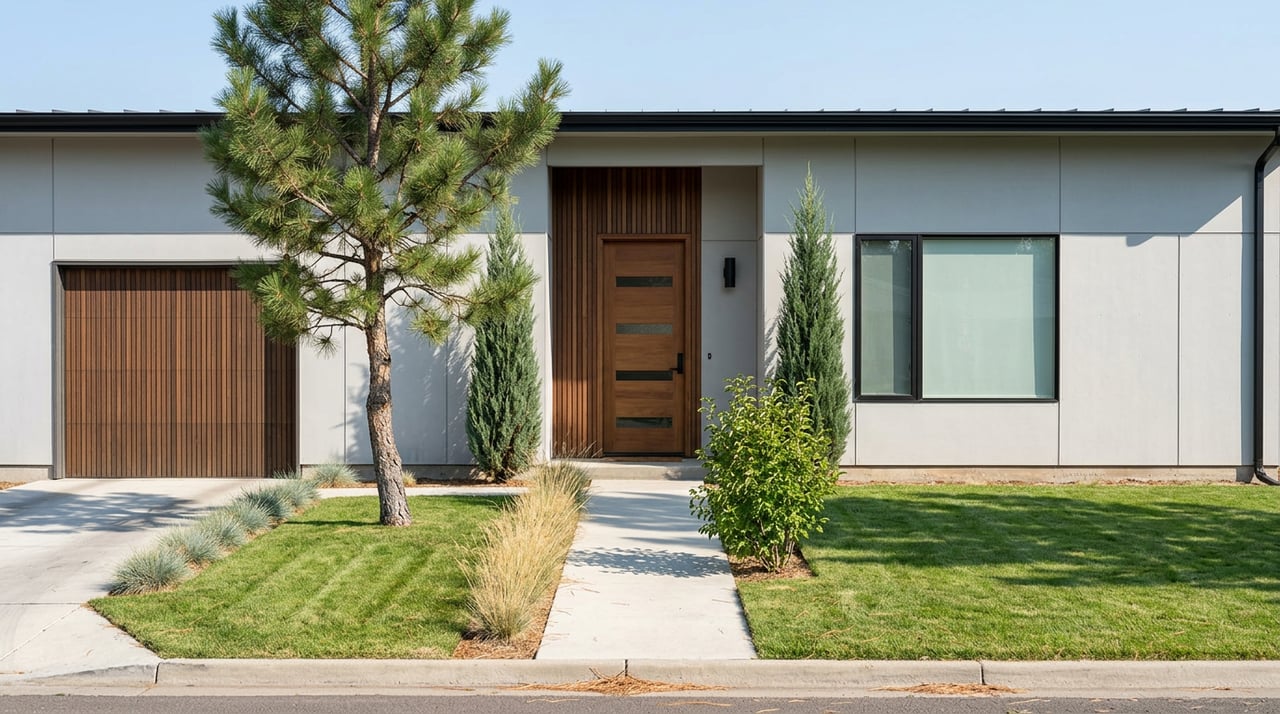
What Sturgis Home Prices Are Actually Pricing In
Hill City and Sturgis sit in the same corner of the Black Hills and draw from the same pool of rally-season buyers, but they tell two different stories about who gets to rent a house to a stranger for a weekend. Hill City voters shut the door on new short-term rentals in residential zones back in June 2022, capping the practice at 8 percent of properties on any given street and requiring existing rentals to convert back to regular housing the moment they change hands. Sturgis never passed anything like it. If you buy a home in Sturgis today and want to list it on a booking site next month, nothing at the city level stops you.
That gap matters more than it looks like on paper, because it's showing up in what Sturgis homes actually sell for. As of May 2026, the median sale price in Sturgis was $385,769, up 3.6 percent year over year, running well above the statewide South Dakota median of roughly $344,000 the same month. That's a meaningful premium for a town whose broader population profile, median household income near $51,000, a cost-of-living index below the national average, doesn't obviously support it. Something else is pricing that gap in, and the most defensible explanation isn't charm or commute times. It's regulatory posture.
I'd put it this way to a client sitting across from me with a spreadsheet open: you're not only buying square footage and proximity to the rally route. You're buying the right to operate, in a category where three of your closest neighboring towns have already taken that right away or wrapped it in permits.
Here's the comparison I'd actually walk someone through:
| Town | Current short-term rental posture |
|---|---|
| Sturgis | No city-specific STR ordinance found; state licensing, health, and tax rules apply |
| Hill City | New STRs banned in residential zones (2022 ballot measure); 8% cap per street; grandfathered units lose STR status at sale |
| Deadwood | Requires a conditional use permit; 200-foot buffer required between STR properties |
| Lead | Requires licensing and health inspections |
| Custer | Has also enacted restrictions on new short-term rentals |
One detail cuts across all five towns and it's worth knowing before you assume Sturgis is simply "the loose one." State law carves out a 14-day window around the Sturgis Motorcycle Rally each August during which any property, in any of these towns, can operate as a short-term rental regardless of local rules. So even a homeowner in Hill City with a grandfathered restriction, or a Deadwood owner without a CUP, gets that one guaranteed window. What Sturgis offers that the others don't is the other 351 days.
The investor math backs up why that matters. Data on Sturgis short-term rental performance puts the median host revenue around $20,120 a year, with an average daily rate near $210 and 48 percent occupancy. Top-performing properties clear $31,254 or more. Those are median-and-above numbers, not best-case fantasies, and they're built on year-round bookings, not just rally week.
That's the piece a lot of vacation-home shoppers miss when they're comparing towns purely on list price. A property in a town with an 8-percent-per-street cap or a 200-foot buffer requirement isn't competing on the same footing, even if the sticker price looks similar. Scarcity of permits changes what a property is worth to the next buyer, and it changes your own exit options if you ever want to sell to another investor rather than a full-time resident.
There's a second number worth sitting with, though, and it's the one that made me want to write this instead of just repeating the price comparison. Broader citywide data on Sturgis, the kind that blends decades of long-held homes with whatever sold last month, puts the town's typical owned home value closer to $236,400. Compare that to the $385,769 median for homes actually changing hands as of May 2026, and you're looking at a real gap between what most Sturgis homeowners' houses are worth on paper and what's currently trading at closing tables. That gap tells you who's buying right now. It's not primarily people replacing a starter home with a bigger one down the street. It's money coming in from outside, priced against rental income potential rather than local wages.
Here's the friction that a lot of out-of-town buyers won't find until they're already under contract, and it's the reason I wouldn't let a client treat "no STR ordinance" as a permanent green light.
Sturgis spent part of this year rewriting its residential camping ordinance, and the direction of that rewrite matters even if the final vote has already come and gone by the time you're reading this. This isn't about whole-house rentals on a booking app. It's about tents, campers, and RVs parked on residential lots during Rally, which is its own significant income stream for a lot of homeowners along the parade route and beyond. The city's proposed ordinance would replace a rule that, as it currently stands, technically prohibits public camping with more than one unit, even though everyone involved knows that's not how camping during Rally actually happens on the ground.
Mayor Kevin Forrester has been direct about why the rewrite is happening. He's described the goal as creating clarity where the current rules don't reflect real behavior, and he's framed the new structure as expanding what residents can legally do while adding guardrails his committee sees as necessary.
"This is actually a major expansion of property rights for Sturgis residents. We're giving people more flexibility and a clearer way to participate during Rally, while still putting guardrails in place to protect their neighbors."
The guardrail that should catch a buyer's attention is this one: the draft ordinance limits residential camping, including the paid, permitted kind, to owner-occupied, single-family properties. Vacant lots and non-owner-occupied homes are explicitly excluded. The committee's stated concern is that opening camping income to investor-owned property could encourage people to buy land purely to host paying campers during Rally, which would work against the neighborhood stability the ordinance is trying to protect.
That's a different animal from a whole-house STR ban. Sturgis still has no ordinance stopping you from renting out an entire house on a booking platform year-round. But the direction of travel here matters. A city actively tightening who can monetize overnight guests, even in the camping category, even while insisting it's expanding rights rather than restricting them, is a city having exactly the conversation Hill City had before it went further. If you're pricing a Sturgis purchase against the assumption that this regulatory openness is fixed, you're underwriting a policy environment that was visibly in motion this year, and city councils that revisit one category of overnight guests tend to eventually revisit the others.
If you're seriously looking at Sturgis as a vacation-home or investment purchase, a few things are worth confirming before your inspection period even opens, not after:
None of this makes Sturgis a bad bet. It makes it a bet with a shelf life on some of its current advantages, which is a very different thing to underwrite than a bet on a fixed rule set. I'd rather you know that going in than find out from a neighbor at the closing table.
Could Sturgis eventually pass a ban like Hill City's? Nothing in the current record points to a ban being imminent, but the city clearly has the legal authority to add STR-specific rules whenever the council chooses to, the same authority Hill City, Deadwood, and Lead have already used.
Does the 14-day Rally exception apply even if I don't live in South Dakota year-round? The exception is tied to the property and the state law governing the Rally period, not to the owner's residency, so it applies regardless of where you live the rest of the year.
Is the new camping ordinance the same thing as a short-term rental ordinance? No. It specifically covers camping units like tents and RVs on residential lots. Whole-house short-term rentals booked through a platform are a separate category still governed by state licensing and tax rules rather than a Sturgis-specific ordinance.
If you're weighing Sturgis against Hill City, Deadwood, or Lead for a vacation property and want the actual numbers on a specific address, not just the town-wide averages, I'd rather walk you through it directly than have you guess from a listing photo. Reach out to Cheyenne McGriff and let's get your free home valuation started.

Get assistance in determining current property value, crafting a competitive offer, writing and negotiating a contract, and much more. Contact Cheyenne today to discuss all your real estate needs!